
The San Francisco 49ers defeated the Philadelphia Eagles 23–19 in the NFC Wild Card playoff game on January 11, 2026, at Lincoln Financial Field in Philadelphia. The victory ended the Eagles’ postseason run and sent San Francisco into the Divisional Round. Although Philadelphia controlled the ball for longer, the 49ers produced more total yards and made their offensive opportunities count when the game reached its decisive moments.
For readers reviewing Philadelphia Eagles vs 49ers match player stats, the final score tells only part of the story. San Francisco recorded 361 total yards compared with Philadelphia’s 307, while the Eagles held possession for 35 minutes and 39 seconds. The 49ers finished with two turnovers, both interceptions, but Philadelphia could not convert its possession advantage into enough points to secure a playoff victory.
Final Score and Team Statistics
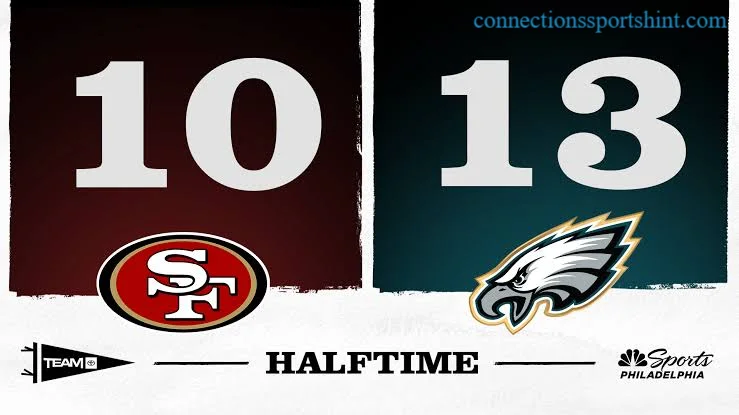
The game remained competitive throughout all four quarters. San Francisco opened the scoring with a touchdown pass from Brock Purdy to Demarcus Robinson. Philadelphia responded with a rushing touchdown by Dallas Goedert, although the Eagles missed the extra point. Goedert later caught a touchdown pass from Jalen Hurts, giving Philadelphia a 13–7 lead before the 49ers added a field goal to make it 13–10 at halftime.
The Eagles extended their advantage with a third-quarter field goal, but San Francisco scored 13 points in the final quarter to take control. Philadelphia briefly moved ahead 19–17 after Jake Elliott’s second field goal. However, two touchdown receptions by Christian McCaffrey helped the 49ers finish with a four-point victory. The quarter-by-quarter score was San Francisco 7, 3, 0 and 13; Philadelphia scored 6, 7, 3 and 3.
| Team statistic | 49ers | Eagles |
|---|---|---|
| Final score | 23 | 19 |
| Total yards | 361 | 307 |
| Passing yards, net | 286 | 167 |
| Rushing yards | 75 | 140 |
| First downs | 20 | 19 |
| Third-down conversions | 6 of 11 | 5 of 16 |
| Time of possession | 24:21 | 35:39 |
| Turnovers | 2 | 0 |
| Penalties | 1 for 15 yards | 7 for 48 yards |
Source: game statistics reported by ESPN and the official 49ers box score.
Brock Purdy and Jalen Hurts Passing Performance
Brock Purdy led San Francisco’s passing attack, completing 18 of 31 passes for 262 yards, two touchdowns and two interceptions. His passing production helped the 49ers generate 286 net passing yards, giving them an advantage through the air. Purdy’s two interceptions created opportunities for Philadelphia, but his touchdown passes played an important role in the final result. His performance showed how a quarterback can produce significant yardage while still facing pressure from an opposing defense.
Jalen Hurts completed 20 of 35 passes for 168 passing yards and one touchdown, without throwing an interception. He also contributed to Philadelphia’s offensive balance, as the Eagles gained 140 rushing yards. Despite completing more passes than Purdy, Hurts and the passing offense produced fewer yards overall. The contrast between the quarterbacks highlights the importance of explosive passing plays, as well as converting drives into touchdowns rather than relying on field goals.
Christian McCaffrey and Demarcus Robinson Lead the 49ers
Christian McCaffrey was one of San Francisco’s most important playmakers. He recorded 48 rushing yards on 15 carries and caught six passes for 66 yards. More importantly, he scored two receiving touchdowns in the fourth quarter, including the four-yard reception from Purdy that gave the 49ers their decisive lead. His ability to contribute as both a runner and receiver made him a central part of San Francisco’s offense.
Demarcus Robinson also delivered a major performance, finishing with six receptions for 111 yards and one touchdown. His 61-yard reception helped establish an early offensive rhythm and created a significant downfield threat. Jauan Jennings contributed in a different way, completing his only pass attempt for a 29-yard touchdown to McCaffrey on a trick play. These contributions demonstrate how San Francisco used several offensive options to challenge Philadelphia’s defense.
Philadelphia Eagles Rushing and Receiving Stats
Philadelphia’s rushing attack produced 140 yards on 36 attempts, compared with San Francisco’s 75 rushing yards on 25 attempts. Saquon Barkley led the Eagles with 106 rushing yards, giving the team an effective ground-game option. However, the Eagles’ advantage on the ground did not translate into a higher final score. The team needed more successful passing plays and better efficiency on important downs to turn its yardage into additional scoring opportunities.
Dallas Goedert contributed directly to Philadelphia’s scoring with a rushing touchdown and a nine-yard touchdown reception from Hurts. Jake Elliott also converted field goals from 41 and 33 yards. Even with these contributions, the Eagles struggled on third down, converting five of 16 attempts. Philadelphia also attempted five fourth-down conversions and succeeded on three. Those numbers illustrate why extended possession alone was not enough to overcome San Francisco’s more productive passing offense.
Defensive Performance and Decisive Moments
The defensive numbers reveal an interesting contrast. Philadelphia’s Quinyon Mitchell recorded two interceptions and a forced fumble, helping the Eagles disrupt San Francisco’s offense. Despite these takeaways, the 49ers continued to find opportunities through their passing game and finished with 361 total yards. San Francisco’s offense was particularly effective at creating large gains, averaging 6.2 yards per play compared with Philadelphia’s 4.3 yards per play.
The final quarter ultimately determined the outcome. McCaffrey’s 29-yard touchdown reception from Jennings put San Francisco ahead 17–16. After Philadelphia regained the lead with a field goal, Purdy connected with McCaffrey for another touchdown. The 49ers missed the extra point after that final touchdown, leaving the score at 23–19. Philadelphia could not complete a comeback, and San Francisco advanced after a late defensive stand.
What the Match Player Stats Tell Us
The Philadelphia Eagles vs 49ers match player stats show that offensive efficiency was a major difference between the teams. Philadelphia ran more plays, gained more rushing yards and controlled possession for over 11 additional minutes. San Francisco, however, averaged more yards per play and generated substantially more net passing yards. That combination allowed the 49ers to score enough points despite giving the ball away twice through interceptions.
For fans comparing individual performances, McCaffrey’s two receiving touchdowns, Robinson’s 111 receiving yards and Purdy’s 262 passing yards stand out for San Francisco. On Philadelphia’s side, Barkley’s 106 rushing yards and Mitchell’s two interceptions were important contributions. The final result reinforces an important football lesson: possession, defensive takeaways and rushing production all matter, but teams must also capitalize on scoring chances and execute in the closing minutes.
Where to Find the Official Box Score
Readers who want to examine every passing, rushing, receiving and defensive statistic can consult the official San Francisco 49ers box score or ESPN’s game statistics page. These records provide detailed player figures and team comparisons, making it easier to check individual performances rather than relying on a final score alone. They are also useful for comparing the game with previous meetings between the franchises.
For reliable research, use the official 49ers box score and the ESPN matchup statistics. Both cover the January 11, 2026, Wild Card game. Checking primary game records is especially helpful when writing previews, recaps, historical comparisons or SEO articles about player performance.
Frequently Asked Questions
What was the final score of the 49ers vs Eagles game on January 11, 2026?
The San Francisco 49ers defeated the Philadelphia Eagles 23–19 in the NFC Wild Card playoff game.
Who was the leading receiver in the game?
Demarcus Robinson led San Francisco with six receptions for 111 receiving yards and one touchdown.
How many passing yards did Brock Purdy reord?
Brock Purdy threw for 262 yards, completing 18 of 31 passes with two touchdowns and two interceptions.
How many passing yards did Jalen Hurts record?
Jalen Hurts completed 20 of 35 passes for 168 yards and one touchdown without an interception.
How many touchdowns did Christian McCaffrey score?
McCaffrey scored two receiving touchdowns, both in the fourth quarter.
How many rushing yards did Saquon Barkley gain?
Saquon Barkley recorded 106 rushing yards for Philadelphia.
Which team had more total yards?
San Francisco gained 361 total yards, while Philadelphia finished with 307.
Where can I find the complete player statistics?
You can review the full game details on the official San Francisco 49ers website or ESPN’s NFL matchup page.
Author Name: Hamid Ali
Email: johanharwen314@gmail.com
Also Read: