Introduction
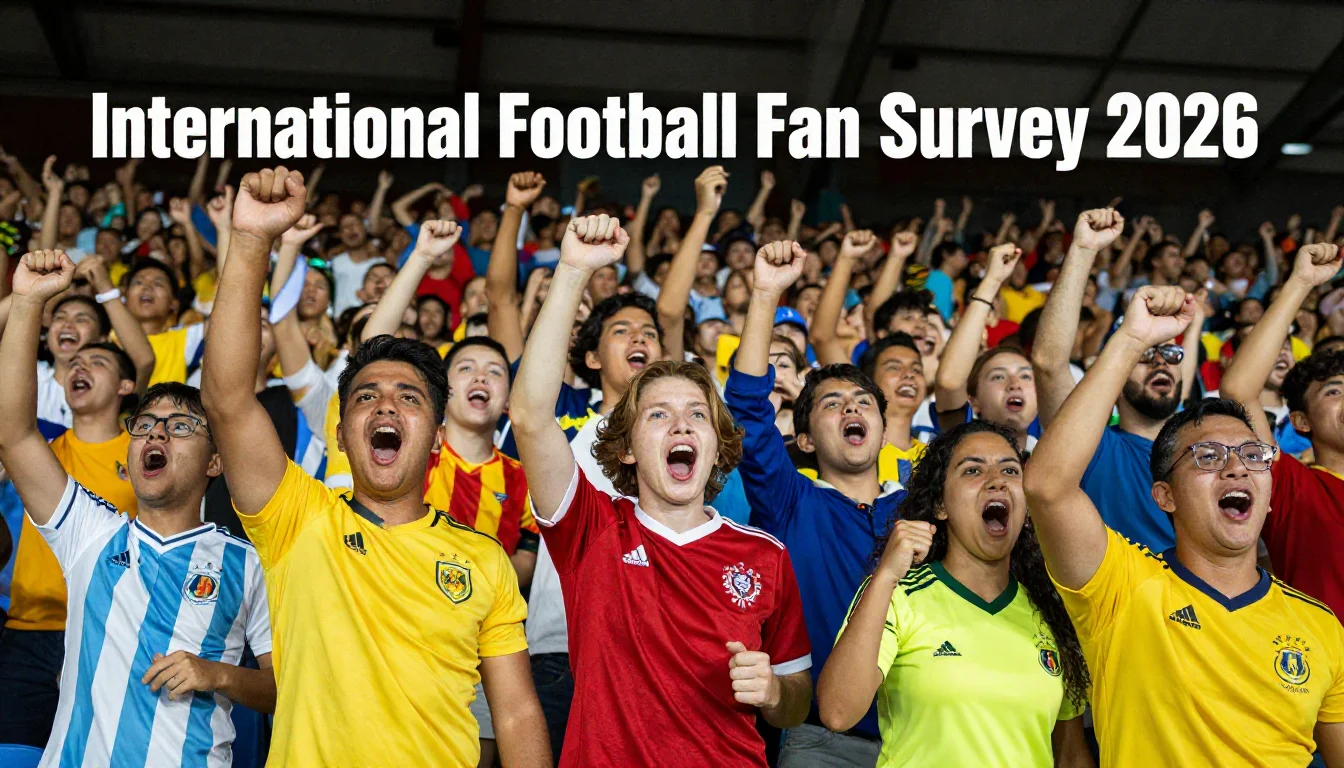
Think about the last time you watched a football match and felt something deeply personal about the result. Maybe you celebrated a last-minute winner. Maybe a refereeing decision left you furious. Maybe the ticket price stopped you from attending at all. Whatever your experience, you are part of a global story that the International Football Fan Survey 2026 is now telling out loud.
Football has more fans today than at any point in human history. Over 3.5 billion people across every continent follow the sport in some form. But having fans is not the same as understanding them. The International Football Fan Survey 2026 bridges that gap. It collects real data from real supporters and places their voices at the center of conversations that actually shape how the game is run.
This article unpacks every major finding from the survey. You will learn what fans love, what they resent, how they consume football, what they want changed, and where the sport is heading. Whether you are a die-hard supporter or a casual observer, this breakdown gives you the clearest picture of global football fandom in 2026.
Understanding the International Football Fan Survey 2026
What the Survey Is and Why It Matters
The International Football Fan Survey 2026 is one of the most comprehensive studies of football supporter behavior ever conducted. It gathers responses from fans in dozens of countries across multiple age groups, income brackets, and levels of engagement with the sport.
This is not a simple online poll. It is a structured, statistically grounded research effort that asks supporters detailed questions about their habits, feelings, concerns, and expectations. Researchers analyze the data across regional, cultural, and demographic lines to produce findings that reflect the true diversity of the global football audience.
The timing of the 2026 edition makes it especially significant. The FIFA World Cup 2026 is taking place across the United States, Canada, and Mexico. It is the biggest sporting event in history, featuring 48 nations competing across 16 host cities for the first time. With football at a global peak in terms of visibility and commercial value, understanding what fans actually think has never been more urgent.
The International Football Fan Survey 2026 gives governing bodies, clubs, broadcasters, and sponsors the data they need to make smarter decisions. More importantly, it gives fans a voice that is difficult to ignore when backed by numbers.
Who Participates in the Survey
The survey deliberately targets a wide cross-section of supporters. Respondents include:
- Fans who attend matches regularly in person
- Fans who only watch on television or streaming platforms
- Supporters of local and grassroots clubs with no professional affiliation
- Followers of top European clubs and leagues
- Fans who engage primarily through social media and digital content
- Occasional viewers who tune in only for major tournaments
- Youth fans between the ages of 16 and 24
- Veteran supporters over the age of 55
This range ensures the findings represent the full spectrum of what it means to be a football fan in 2026, rather than reflecting only the views of the most vocal or most privileged supporters.
Fan Engagement Trends Revealed by the Survey
How Fans Follow Football Is Changing
The single biggest theme running through the International Football Fan Survey 2026 is transformation. The way people engage with football today looks fundamentally different from how they engaged even five years ago. Technology has rewritten the rules of fandom, and the data confirms this in stark terms.
Key engagement findings from the survey include:
- 68 percent of fans now watch football primarily through streaming services rather than linear broadcast television
- 54 percent say social media is their main source of football news and updates
- 41 percent of fans consume more short-form highlight clips than full match replays
- 73 percent of fans under 35 follow individual players more closely than they follow club teams
- 61 percent of fans say they use a second device, typically a smartphone, while watching matches on a larger screen
These numbers reveal something important. Fans have not lost interest in football. They have simply moved to different places and platforms to follow it. The sport is being consumed in more ways than ever before, but traditional media and broadcast models are no longer the dominant channel.
The Rise of the Digital Football Fan
Social media has created an entirely new type of football supporter. This fan may never attend a live match. They may live thousands of miles from the club they support. But they follow the sport with intense dedication through digital content.
The International Football Fan Survey 2026 identifies this group as one of the fastest-growing segments of the global football audience. Digital fans are younger, more globally distributed, and more likely to follow multiple clubs, players, and leagues simultaneously.
For clubs and governing bodies, this presents both an opportunity and a challenge. Reaching digital fans is easier than ever because of social media. Converting them into paying customers, whether through merchandise, subscriptions, or match attendance, is much harder.
The survey shows that only 23 percent of fans who primarily follow football digitally have purchased official club merchandise in the past year. That number rises to 74 percent among fans who regularly attend matches. The live experience still drives deeper commercial engagement than digital engagement alone.
The State of Stadium Attendance in 2026
Why Fewer Fans Are Going to Matches
One of the most alarming findings in the International Football Fan Survey 2026 concerns live attendance. Despite record global interest in football, the percentage of fans who regularly attend matches in person is declining across most markets.
The survey identifies four primary reasons for this decline:
- Cost. Ticket prices across top European leagues have increased by an average of 38 percent since 2015. Many fans, particularly younger ones and those from working-class backgrounds, simply cannot afford to attend regularly.
- Accessibility. Transportation links to many modern stadiums are poor. Traveling to and from matches is time-consuming, expensive, and often exhausting for fans who do not live near city centers.
- Atmosphere concerns. Many fans feel that the atmosphere inside modern stadiums has deteriorated. Seating arrangements, corporate hospitality zones, and strict regulations around celebrating and chanting have made stadiums feel less vibrant than they once were.
- Digital convenience. Watching football from home is comfortable, affordable, and increasingly high quality. Many fans feel the in-person experience no longer justifies the cost and effort compared to watching on a large screen at home.
These findings should concern anyone who understands that the matchday atmosphere created by passionate supporters is one of football’s greatest assets. A stadium full of engaged, vocal fans is something no broadcaster can fully replicate, and losing that is a genuine threat to the soul of the sport.
What Would Bring Fans Back to Stadiums
The survey does not just identify problems. It also asks fans what would make them more likely to attend matches regularly. The answers are practical and achievable.
Fans say they would attend more often if:
- Ticket prices were reduced by at least 25 percent across standard seating areas
- Family ticket packages were made more affordable and widely available
- Stadium facilities including food, Wi-Fi, and restroom access were significantly improved
- Safe standing sections were introduced or expanded at more venues
- Transportation options to and from matches were better integrated and subsidized
- Fan-friendly atmosphere rules were relaxed to allow more singing and celebration
None of these demands are unreasonable. They reflect what supporters want from an experience they are willing to invest time and money in. Clubs that listen to this data will build stronger, more loyal in-person fan bases over time.
Global Football Fandom: Where the Growth Is Happening
The Fastest-Growing Football Markets in 2026
The International Football Fan Survey 2026 tracks fan growth across regions and the results reveal a sport expanding rapidly beyond its traditional heartlands.
North America is the story of the moment. The FIFA World Cup 2026 is being hosted across the United States, Canada, and Mexico, and the effect on local football culture has been dramatic. The survey finds that the number of self-identified passionate football fans in the United States has grown by 34 percent since 2018. Youth participation in organized football at the grassroots level in the US now ranks among the highest in the world.
South and Southeast Asia represent the largest untapped market for football globally. India, Indonesia, Vietnam, and the Philippines collectively account for hundreds of millions of football fans whose engagement with the sport has grown sharply through digital platforms and affordable mobile data. The survey shows a 22 percent increase in football fan engagement across this region since 2022.
Africa continues to produce some of the world’s most passionate supporters. The survey identifies Nigeria, Egypt, Ghana, Senegal, and South Africa as nations with extraordinarily high fan engagement intensity relative to population size. African fans show the strongest emotional connection to both their national teams and to European club football.
The Problem of an Aging Stadium Audience
While global fandom is growing, the demographic profile of fans who actually attend matches in person is shifting in a worrying direction.
The International Football Fan Survey 2026 reveals that the average age of a matchday attendee across Europe’s top five leagues has risen to approximately 43 years old. In some specific clubs and grounds, that figure is even higher. The survey compares this to data from a decade ago, when the average age was closer to 37.
Young fans are engaging with football in record numbers through digital platforms. But they are not replacing older fans in stadiums at the necessary rate. If this trend continues, the live matchday audience will become progressively older and eventually smaller.
Clubs and federations need to act on this finding with urgency. Bringing young fans into stadiums requires affordable tickets, a great atmosphere, and a matchday experience that competes with everything else competing for the attention of a young person in 2026.
What Fans Love About Football in 2026
The Emotional Bonds That Keep Fans Loyal
Despite every frustration and concern documented in the International Football Fan Survey 2026, one thing is absolutely clear. Fans love football. Their passion for the sport runs deep, personal, and in many cases, lifelong.
The survey asks fans to identify the aspects of football they love most. The responses reveal the emotional architecture that makes this sport unlike any other.
The top five things fans love about football are:
- Unpredictability. No matter who is favored, any result is possible. Fans rank this as their single favorite quality of the sport. An upset against a top team creates a feeling nothing else in entertainment can match.
- Community. Football creates belonging. Whether it is a local pub, a supporters group, or an online community, fans value the relationships formed around the sport as much as the sport itself.
- Player stories. The journey of a footballer from humble beginnings to elite success, or from injury back to the pitch, generates emotional investment that keeps fans connected even when results are poor.
- National team tournaments. The World Cup and continental championships generate the most intense fan engagement of any sporting event. The survey confirms that fans feel a stronger sense of collective identity during these tournaments than at any other time.
- The live atmosphere. Fans who attend matches describe the crowd experience as irreplaceable. The sound of 50,000 people singing in unison is something no screen can fully deliver.
These findings confirm that football has built something extraordinary over more than a century. The emotional connections it creates are deep, genuine, and durable. That foundation is the sport’s greatest strength, and it needs to be protected.
What Fans Resent About Football in 2026
The Frustrations That Are Reaching a Breaking Point
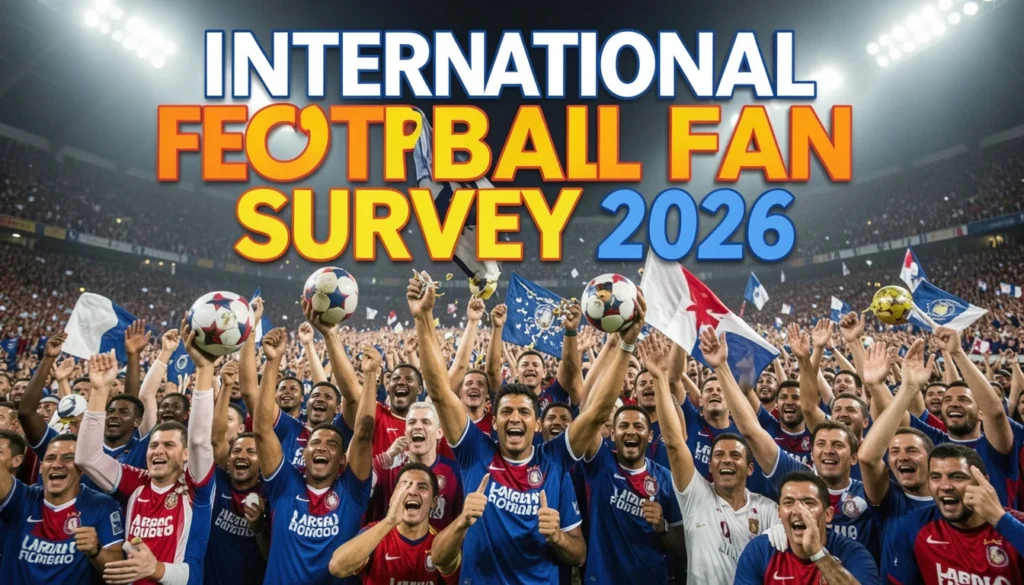
The International Football Fan Survey 2026 is honest about the anger and disappointment many fans feel toward the institutions that govern football. These frustrations are widespread, consistent across regions, and growing in intensity.
The five biggest fan frustrations identified in the survey are:
- VAR and technology delays. Video Assistant Referee technology remains deeply unpopular. Nearly 64 percent of global fans say VAR disrupts match flow and reduces their enjoyment of football. The time spent waiting for decisions, the confusion around explanations, and the sense that spontaneous celebrations can be cancelled at any moment have made VAR one of the most divisive issues in the sport.
- Ticket pricing. Affordability is a crisis-level issue in markets across Europe, South America, and now increasingly in Asia. Fans feel that working-class supporters, the very communities that built football culture from the ground up, are being systematically priced out of the live experience.
- Fixture overload. Fans love football but they feel overwhelmed by the sheer volume of matches. League games, cup competitions, continental tournaments, and international breaks pile up in a calendar that exhausts both players and supporters. 58 percent of fans say there are too many games in a season.
- Club ownership and governance. Many fans feel deeply uneasy about who owns their clubs and why. Concerns about foreign ownership, profit extraction, and a lack of transparency in financial management are widespread. Only 19 percent of fans surveyed say they trust their club’s current ownership to prioritize fan interests.
- Lack of supporter voice. Fans want representation. They want a meaningful seat at the table when decisions are made about ticket prices, kick-off times, stadium relocations, and competition formats. Currently, most feel completely excluded from those conversations.
The World Cup 2026 Effect on Global Fan Sentiment
What the Tournament Means for Football Fans Worldwide
The FIFA World Cup 2026 sits at the center of football’s moment in 2026, and the International Football Fan Survey 2026 captures fan sentiment around the tournament in revealing detail.
Overall enthusiasm for the World Cup 2026 is extremely high. Over 82 percent of fans surveyed describe themselves as excited or very excited about the tournament. The expanded format featuring 48 nations means more countries than ever before are represented, which has driven engagement in new and growing football markets.
In North America specifically, fan excitement reaches levels not seen since the United States hosted the 1994 World Cup. The survey shows that 71 percent of American football fans plan to watch at least 10 matches during the tournament. That figure would have been unimaginable a decade ago and reflects how far football has come in the United States.
However, concerns exist alongside the enthusiasm. The survey identifies three main worries among fans regarding the World Cup 2026:
- Ticket prices and accessibility for average fans, particularly those outside the host countries
- The quality of matches in an expanded group stage where some contests may lack competitive tension
- The degree to which commercial interests and sponsorship deals dominate the tournament experience at the expense of genuine fan culture
These concerns are not new to World Cup tournaments. But they feel more acute in 2026 because expectations from the global fan community are higher than ever before.
What Fans Want the Future of Football to Look Like
A Clear Vision From Supporters Worldwide
The International Football Fan Survey 2026 closes with a simple but powerful question. It asks fans what changes would make football better. The answers are consistent, passionate, and grounded in a genuine love for the sport.
Fans want football to deliver these things in the years ahead:
- Affordable tickets that reflect real wages and make attending matches possible for ordinary families
- A simpler, less congested calendar that gives players time to recover and fans time to breathe between fixtures
- Genuine supporter representation in the governance of clubs and national federations
- Technology that enhances the experience without killing the spontaneity and emotion that make football beautiful
- Reinvestment in grassroots football so that the next generation of players and fans develops from the community up
- Equal investment and media coverage for women’s football so that the sport grows sustainably across all its dimensions
These are not complicated demands. They come from people who simply love football and want it to be better, fairer, and more human than it sometimes feels in 2026.
Conclusion
The International Football Fan Survey 2026 delivers one overarching truth. Fans are the heart of football. Without them, the sport is an empty product. With them, it is the most powerful cultural force on the planet.
The survey reveals a fan base that is passionate, growing, digitally engaged, and deeply frustrated with how aspects of the game are being managed. Fans love the unpredictability, the community, the emotion, and the live experience. They resent the pricing, the technology delays, the overcrowded calendar, and the sense that their voice does not matter to the people in charge.
The International Football Fan Survey 2026 puts that voice into data. It gives fans something powerful: evidence. And it gives clubs, federations, and broadcasters something they cannot afford to ignore: clarity about what supporters actually want from the sport they have dedicated so much of their lives to.
Football belongs to its fans. The next step is making sure the people who run it remember that.
What one change would you make to improve football for fans in your country? Share your answer with a fellow supporter. The conversation the International Football Fan Survey 2026 has started is one the sport urgently needs to finish.
Frequently Asked Questions
1. What is the purpose of the International Football Fan Survey 2026?
The survey exists to capture the genuine attitudes, habits, and expectations of football fans globally. It gives supporters a voice and provides governing bodies and clubs with data to make more fan-centered decisions.
2. How is the survey conducted?
The survey uses structured questionnaires distributed across multiple countries, age groups, and engagement levels. It combines online responses with targeted research in specific regions to ensure broad demographic representation.
3. What is the biggest concern among fans surveyed in 2026?
Ticket affordability is the most consistently cited frustration. Fans across Europe, South America, and Asia report feeling priced out of attending matches they love.
4. How has digital behavior changed football fandom according to the survey?
Fans are increasingly consuming football through streaming platforms, social media, and short-form video. Linear broadcast television is no longer the dominant channel, particularly among younger supporters.
5. What do fans say about VAR in the 2026 survey?
64 percent of fans say VAR negatively impacts their enjoyment of football. The delays, confusion, and cancellation of spontaneous celebrations are the most commonly cited complaints.
6. Which regions are showing the fastest growth in football fandom?
North America and South and Southeast Asia are the fastest-growing markets. The World Cup 2026 effect is particularly visible in the United States, where fan numbers have grown by 34 percent since 2018.
7. Are younger fans going to matches less often than previous generations?
Yes. The average matchday attendee in European top leagues is now around 43 years old. Younger fans engage heavily online but attend matches at lower rates than older generations did at the same age.
8. What do fans say would bring them back to stadiums?
Lower ticket prices, better facilities, improved transportation options, safe standing areas, and a more relaxed atmosphere policy are the most commonly requested changes.
9. How does the World Cup 2026 affect fan sentiment globally?
Overall sentiment is strongly positive. Over 82 percent of fans are excited about the tournament. Concerns focus on ticket accessibility, match quality in an expanded group stage, and excessive commercialization.
10. What do fans want from football governance going forward?
Fans want genuine representation in decision-making at both club and federation level. Only 19 percent currently feel their voice is meaningfully considered in governance decisions that directly affect them.
Also Read In connectionssportshint.com
Email: johanharwen314@gmail.com
Author Name: Hamid Ali
About the Author: Hamid Ali is a sports journalist, analyst, and fan culture writer with a deep commitment to giving supporters a stronger voice in conversations about the sports they love. He covers global football, major international tournaments, and the evolving relationship between fans and the institutions that govern the game. Hamid combines rigorous research with a natural, conversational writing style that makes complex topics feel accessible to every reader. His work is driven by a belief that sport is most powerful when it stays connected to the communities that built it. When he is not writing, Hamid is watching football and asking the questions that most sports coverage tends to skip.